
Citizens, journalism, independence and content: Let’s be clear
A guest column

Readers, please welcome a guest columnist today, writing from Minneapolis on issues of relevance the past few weeks.
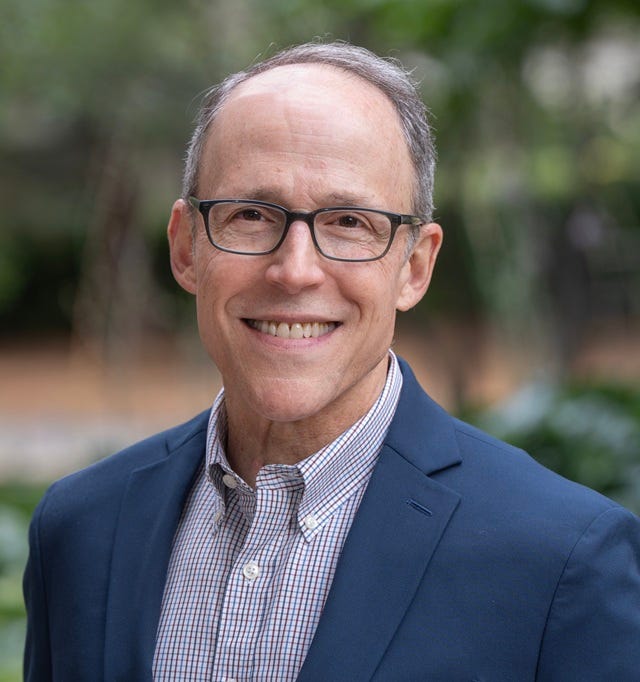
I’ve known Scott Libin a long time from my broadcast news days. He’s a former TV news reporter, anchor and news director in the Twin Cities. He’s currently a senior fellow at the University of Minnesota’s Hubbard School of Journalism and Mass Communication. He’s a past chairman of the Radio-Television News Directors’ Association and was a principal author of the association’s Code of Ethics. During my time on the association’s board of directors, Scott was highly sought out to teach courses on leadership and ethics. Whenever he comments on one of my columns, he always brings up points I wish I had thought of!
So I asked him what was going through his ethical mind, sitting in Minneapolis and keeping a keen eye on the journalism being practiced during the ICE surge there.
With my sincere thanks, here’s Scott’s column.
Minnesota used to be known for names that would make most people smile: Prince. Judy Garland. Mary Tyler Moore.
In this decade, the names might make you cry: George Floyd. Renee Good. Alex Pretti.
There are also names in the news around here that represent something much more nuanced – and every bit as polarizing: Nick Shirley. Don Lemon. Georgia Fort.
Shirley attracted attention, including that of the president, with antics that might have gotten him fired from most mainstream news organizations. His “investigation” of some Somali daycare centers skipped the drudgery and details that bog down traditional reporters for weeks or months. Who has time? And why bother, when you can just show up with a camera, bang on doors and demand access to other people’s children?
Lemon and Fort accompanied protesters who disrupted a Sunday morning worship service on a tip that one of the church’s pastors works during the week for ICE. Lemon and Fort, both formerly employed by television news organizations, say they were not there as activists, but as reporters; yet they now face federal charges, along with the protest’s organizers, for allegedly depriving church goers of their First Amendment right to exercise religion.
Descriptions of those who document our digital age include “content creators,” “citizen journalists” and “independent journalists,” among other titles. These terms can conflate, confuse or confirm what we want to believe. They deserve some scrutiny.
Who is a journalist?
In my experience, it’s usually better to describe actions than identities. Who is a journalist? I would argue it’s anyone who practices journalism. I teach journalism for a living, but there is no degree or license required to pursue the craft, and no journalist I know wants to give the government the power to determine who qualifies. Yet journalism is not the same thing as simply “creating content.”
Almost everybody’s a content creator. I’m acting as one right now. Content can be text, audio, video, music, you name it. In the digital age, barriers to entry in all of these fields have virtually disappeared. Producing material for mass consumption no longer requires a huge investment in equipment or extensive training in a craft. Whether you think that’s good, bad or both, it’s hard to dispute.
And distributing that content no longer requires “ink by the barrel,” to excerpt the old warning about tangling with newspaper publishers. It doesn’t require an FCC license and a broadcast transmitter, either. But here’s where I get to employ, for probably the hundredth time, my favorite Edward R. Murrow quote: “Just because your voice reaches halfway around the world doesn’t mean you are wiser than when it reached only the end of the bar.” (Or words to that effect; there are many variations of that reaching around the online world today.) Murrow was referring to television in the 1950s, but his wisdom seems even more salient in today’s social media world.
Are content creators journalists? That’s like asking if books are fiction. Some are, some aren’t. This is not an entirely new question: Is television programming journalism? How about newspaper content? Radio? Again, some is, some isn’t. Sometimes the distinctions can be difficult to discern.
That is especially true of online content, and the question is critical: The platforms where media messages are found, social media included, are not as important as the source. Who originated the content, how and why? Was it someone I should trust? I can find content on TikTok or YouTube from The New York Times, a teenage poet or anybody else with something to say.
Back to today’s terminology: “Citizen journalist” and “citizen journalism” are among my least favorite phrases. I try never to use them without attribution or quotation marks. My problem is with both the first and second words in these expressions.
Surely we can all agree that the term “citizen,” which has a specific and very consequential legal definition, should not be tossed about carelessly. Has it ever been more relevant to news of the day? “Citizen” is not a synonym for person, witness, amateur, activist, observer, etc. Journalists should use language with precision. Some of the people recording and sharing what they witness on the streets these days are citizens. Some are journalists. Some are both. Some are neither.
Doing my own taxes doesn’t make me a “citizen accountant.” Putting a BandAid on a scraped knee doesn’t make me a “citizen paramedic.” And pressing “record” on a smartphone camera doesn’t make anyone a journalist – whether that person is a citizen, a legal resident or something else.
Citizenship has real meaning. Journalism does, too. Recognizing the difference between journalism and all of the other kinds of content competing for attention today is essential to media literacy. And media literacy is everybody’s obligation to society.
My favorite of the new titles is “independent journalist,” though I think the term is aspirational for many who claim it.
Independence is key
Independence is one of the guiding principles of journalism published by my mentor, Bob Steele, arguably the most influential journalism ethicist of the last half-century or so. He defined it as resistance to the undue influence of external forces, whether commercial, political or personal. Journalists, Bob taught me, owe their primary allegiance not to a brand, to a movement or to any entity, but to the public – also known as the communities those journalists serve. The interests of readers, viewers and listeners come first.
(This is why, if there’s any term I like less than “citizen journalism,” it’s “brand journalism.” Don’t even get me started.)
Independence, in the context of journalism ethics, doesn’t mean you can’t get paid for your work. It doesn’t mean you can’t work collaboratively. The new definition of “independent journalism,” however, generally refers to those who work for themselves and are answerable only to their followers, a constituency once known by the 20th century term “audience.”
Are today’s self-proclaimed independent journalists truly independent in the Bob Steele sense? Some are, some aren’t. I would argue that these new practitioners are both independent and journalists if, instead of pandering to any ideology, they serve up facts, even those that are inconvenient. They provide context. They don’t tell people what to think or to believe. They help news consumers reach informed decisions of their own and make better decisions for themselves.
That mission is very different from the role of “designated” or “constitutional” observers, of activists or of the many others out there on the streets of Minnesota and other cities this winter. Their motivations vary, and it’s not the job of journalists to judge them. It is, however, the job of journalists to report with accuracy, and that includes the words they choose.
-Scott Libin - Minneapolis, Minnesota
Here’s the Sunday roundup of the latest columns from the Iowa Writers’ Collaborative.
Thank you for this. It always bugs me when content creators call themselves “journalists.” When I was a reporter, I always felt I had an obligation to tell all sides of a story, even when I disagreed with one or more sides. That’s not what these “independent journalists “ do at all. ( Hate that term too.)
On another note, this column has two of my worlds collide since I worked at both KCCI and KSTP under Dave & Scott.
I enjoyed this piece. It provides perspective on how confusing today's "reporting" is. It'd be nice to have a known credential, much like MD or PHD, but then it wouldn't provide freedom of speech. No doubt all the new types of reporting doesn't help the poor reputation our media receives.